
欢迎您访问52ij英汉互译网,今天小编为你分享的英语知识是:【少吃牛肉=为环保做贡献?何乐而不为!】,下面是详细的分享!
少吃牛肉=为环保做贡献?何乐而不为!
On a farm in coastal Maine, a barn is going up. Right now it's little more than a concrete slab and some wooden beams, but when it's finished, the barn will provide winter shelter for up to six cows and a few head of sheep. None of this would be remarkable if it weren't for the fact that the people building the barn are two of the most highly regarded organic-vegetable farmers in the country: Eliot Coleman wrote the bible of organic farming, The New Organic Grower, and Barbara Damrosch is the Washington Post's gardening columnist.
缅因州的一个沿海的农场上,有个在建的牲口棚。目前,(这个牲口棚)只不过是一块混凝土板和一些木头檩子。不过等建好了,这个牲口棚则最多可收容6头牛和几头羊在里面过冬。这一切似乎都不足为奇,不过当你知道建牲口棚的人是两位全国最德高望重的有机蔬菜种植专家的时候,恐怕你就不会这么想了。此二人一位叫艾略特科尔曼,曾写过有机农业的著作《新有机作物种植者》;另一位叫芭芭拉达姆罗施,是华盛顿邮报的园艺专栏作家。
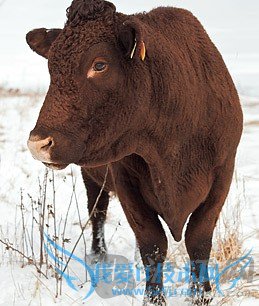 At a time when a growing number of environmental activists are calling for an end to eating meat, this veggie-centric power couple is beginning to raise it. "Why?" asks Coleman, tromping through the mud on his way toward a greenhouse bursting with December turnips. "Because I care about the fate of the planet."
如今,越来越多的环保分子在呼吁人们不要再吃肉,而这两位以素食为中心的重量级人物却又在养牲口。为什么呢?科尔曼一边踩着泥巴走向一个长满罗卜的温室,一边回答说:“因为我在乎地球的命运!”
Ever since the U.N. Food and Agriculture Organization released a 2006 report that attributed 18% of the world's man-made greenhouse-gas emissions to livestock - more, the report noted, than what's produced by transportation - livestock has taken an increasingly hard rap.
2006年,联合国粮农组织发布了一项调查报告,报告显示在与人类活动相关的温室气体排放量中,牲畜的排放量占了18%。报告中写到,这比人类在交通运输这一块产生的温室气体还要多。因此,牲畜已日益成为人们矛头所指的对象了。
At first, it was just vegetarian groups that used the U.N.'s findings as evidence for the superiority of an all-plant diet. But since then, a broader range of environmentalists has taken up the cause. At a recent European Parliament hearing titled "Global Warming and Food Policy: Less Meat=Less Heat," Rajendra Pachauri, chairman of the Intergovernmental Panel on Climate Change, argued that reducing meat consumption is a "simple, effective and short-term delivery measure in which everybody could contribute" to emissions reductions.
起初,只是那些素食主义团体用联合国的一些调查发现来证明食素的好处。但自从那则报告发布后,更大范围的环境主义者也加入了提倡食素的行列。最近,在欧洲议会的一个题为“全球变暖与食物政策:少吃肉=少排热”的听证会上,政府间气候变化专门委员会主席帕乔里认为,减小对肉类的食用量是一个简单易行、效果显著、短期就能展开的方式,每个人都可以为减少温室气体排放做贡献。
And of all the animals that humans eat, none are held more responsible for climate change than the ones that moo. Cows not only consume more energy-intensive feed than other livestock; they also produce more methane - a powerful greenhouse gas - than other animals do. "If your primary concern is to curb emissions, you shouldn't be eating beef," says Nathan Pelletier, an ecological economist at Dalhousie University in Halifax, N.S., noting that cows produce 13 to 30 lb. of carbon dioxide per pound of meat.
而在人类食用的牲畜中,牛是在温室气体排放上首当其冲的。牛不仅比其他牲畜消耗更多的能源密集型饲料,还能产生更多的强力温室气体-甲烷。哈利法克斯市,达尔蒙西大学的生态经济学家弥敦道佩尔提埃说,“如果你的初衷是减少温室气体排放,那你就不该再吃牛肉。”他还提到,牛每长一磅肉,要产生13到30磅的二氧化碳。
So how can Coleman and Damrosch believe that adding livestock to their farm will help the planet? Cattleman Ridge Shinn has the answer. On a wintry Saturday at his farm in Hardwick, he is out in his pastures encouraging a herd of plump Devon cows to move to a grassy new paddock. Over the course of a year, his 100 cattle will rotate across 175 acres four or five times. "Conventional cattle raising is like mining," he says. "It's unsustainable, because you're just taking without putting anything back. But when you rotate cattle on grass, you change the equation. You put back more than you take."
那么,就有疑问了:为什么科尔曼和达姆罗施认为在他们的农场上多养牲畜就会帮助地球(减少温室气体)呢?牧牛者西恩知道答案。一个冬季的周六,在他的哈德维克的农场上,西恩把他的一群肥大的德文牛从一块牧草地上赶到了一块新的、牧草茂盛的牧地。在一年当中,他的100头牛会在175英亩的牧地上(如此)轮转吃草4、5次。“传统的养牛方法就像挖矿”,他说,“那是不可持续的,因为只有产出而没有投入。但是如果你让你的牛在一块块的草场上轮转吃草的时候,种回去的比牛吃的草还要多,那么情况就不一样了。”
新春课程温暖上线,春季,和网校一起成长!
价值上千元的课程,在52ij英汉互译只要200元!快来体验最新潮、简便、高效的学习模式吧!
★ 中级口译春季班:【点击这里报名】

★ 高级口译春季班:【点击这里报名】
★ BEC商务英语初级春季班:【点击这里报名】
★ BEC商务英语中级春季班:【点击这里报名】
- 评论列表(网友评论仅供网友表达个人看法,并不表明本站同意其观点或证实其描述)
-